Showing posts with label Johannes. Show all posts

Friday, 11 September 2015

Faustian Cycle: The Black Raven. A manuscript

Upon researching the Faustian cycle of magical writings for a current project, I came to discover that there seem to be a plethora of manuscripts scanned and hosted online the likes of which I could not find a few years ago, in different locations. 


I will be taking upon myself the delicate task of finding them and bringing them to public attention.

Many of them find their published content in Scheible s Kloster, but we will dwell on that more when time permits. 

The following manuscripts are from the Darmstadt Digital Collections. The first one is called Der Schwarze Rabe, namely, the Black Raven, one of the most common names of the Faustian grimoires, albeit with a different content each time. 

Shelfmark: Hs-2543
Der schwarze Rabe / The Black Raven
Internal date: Passau, 1519- 30 July 
                                    15 April 1515
Pages: 34
Material: Paper, most likely. Black ink throughout. 
Binding: Quarter binding with blue paste-paper and brown marbled leather (?).

Digital Collectios Darmstadt - Manuscripts (Universitäts- und Landesbibliothek Darmstadt)
Link: http://tudigit.ulb.tu-darmstadt.de/show/Hs-2543 
URN: urn:nbn:de:tuda-tudigit-50299  
Metadaten: METS

The seals are coded as follows: F(aust)S(chwarze)R(rabe).(page)1.(figure)1.=FSR.1.1  

FSR.1
The Black Raven. I ve yet to determine if this black raven with a ring in it s beak has any connection to the coat of arms of the Korwin/Corvin nobiliary line, from Poland to Transylvania. 


FSR.6.1-59
Typical cryptogram for a conjuration, seen throughout such texts of the Faustian Cycle, to be studied at a later date.

FSR.10.1-32
Cryptogram

FSR.15.1-15
Cryptogram


FSR.15.16-61
Cryptogram
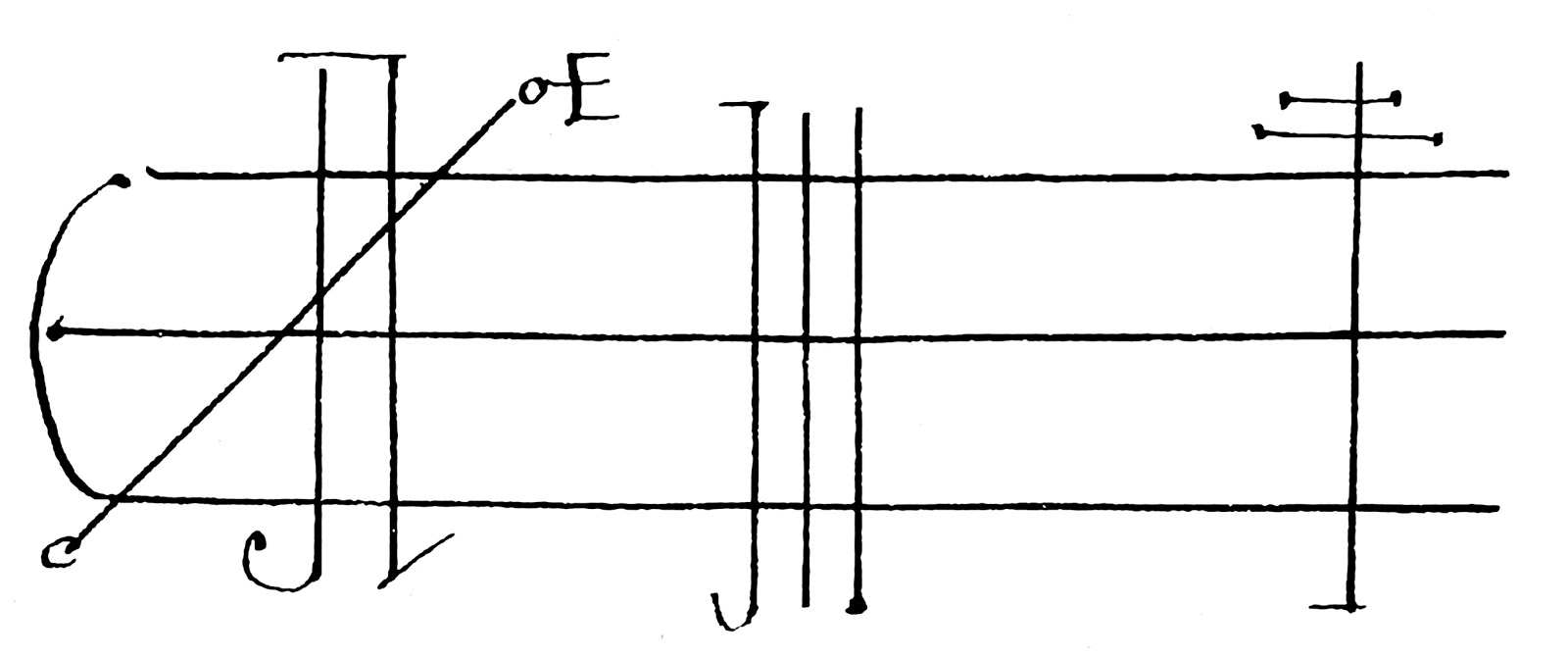
FSR.15.62
Complex Seal


FSR.19
Circular Seal

FSR.20.1-31
Cryptogram


FSR.21
Cryptogram

FSR.22
Cryptogram


FSR.23
Diagramgram


FSR.24.1
Circular seal.

FSR.24.2
Circular seal
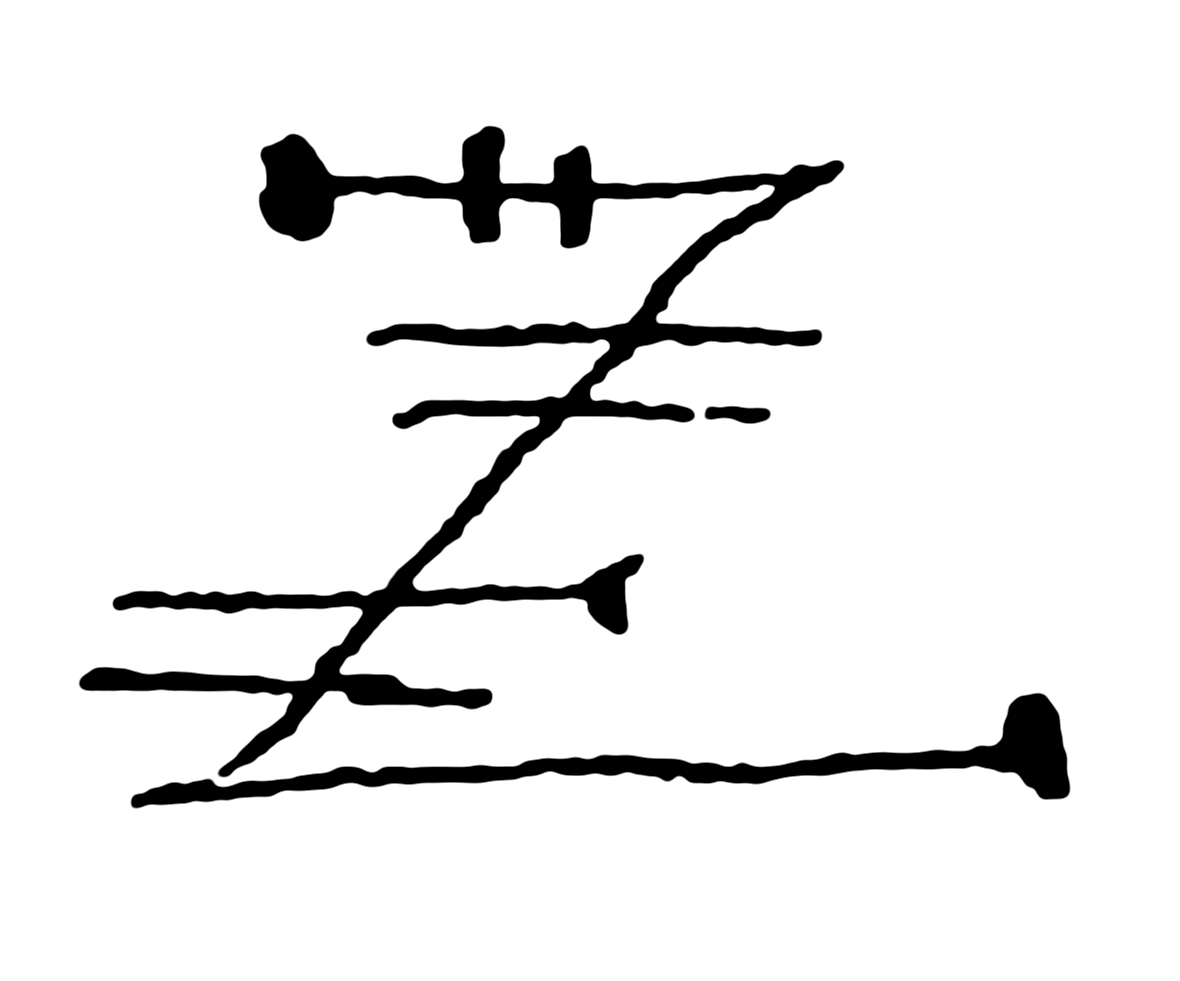
FSR.25
Small seal. 


FSR.30
Circular seal

FSR.31
Cryptogram

This last set seems to be a key for the cryptogram used, at least in part, detailing the symbols used to name the seven Olympic spirits of the Arbatel, with seven angelic overseers, presumably.

FSR.31.1. Aratron - Derdiel
FSR.31.2. Bethor - Miseriel
FSR.31.3. Phaleg - Seraphiel
FSR.31.4.Och - Asfariel
FSR.31.5. Hagith - Salomiel
FSR.31.6. Ophiel - Saleriel (?)
FSR.31.7. Pfuel (?) - Iachiel


Saturday, 15 September 2012

Seals of the Archangels in Faust's Magia Naturalis

One of the most curious works of the Faustian cycle must be the five-volume Doktor Johannes Fausts Magia naturalis et innaturalis, oder dreifacher Höllenzwang, letztes Testament und Siegelkunst : nach einer kostbar ausgestatteten Handschrift in der Herzoglichen Bibliothek zu Koburg, 1849

The fifth volume of this work, very rich in pentacles and seals, contains a number of plates with pentacles ascribed to the seven planetary angels. 

I have a used the scanned copy hosted by the Herzogin Anna Amalia Bibliothek in Weimar:


Plate 30 features he seal of Anael in a very distinctive fashion, perhaps tributary to a manuscript source, with the first mark containing a sort of heart-shape instead of a teardrop, and a snake-figure replacing the somewhat phallic mark of the Heptameron.


 Plate 38 features a distinctive version of the seal of Raphael, a sort of abbreviated version of the Heptameron.

The following plates are more systematic in their representation and feature the whole scale of the seven planetary angels.


 Plate 99, titled I. The Seal of St. Michael, abounds in seals that so far are unknown from other sources, but the seal in the enclosure certainly is extracted from the Heptameron. The perimeter has the names of the angels of the day of the Lord and the spirits of the air, king and ministers alike, which draw directly from the Heptameron. Not only that, but the order of the angels is the order of the days of the week, starting with Sunday, and the attribution is Michael-Sun, Raphael-Mercury. There is no doubt about it that the Heptameron is the source of the seals, one instance where the inspiration can be absolutely certain.


 Plate 100:  II. The Seal of St. Gabriel


  Plate 101:  III. The Seal of St. Raphael
note: this should have been Mars, and Samael. 


  Plate 102:  IV. The Seal of St.Samael
note: this should have been Raphael.
 

  Plate 103:  V. The Seal of St. Sachiel


  Plate 104:  VI. The Seal of St. Anael


  Plate 105:  VII. The Seal of St. Gabriel

I realize there is no point in analyzing the seals in comparison to the figures of the Heptameron to establish a link to them. However, I shall nonetheless proceed to note the differences recorded for two reasons. The first is for recording just how much a seal can be morphed and changed from one direct source to another document, that is, just how much a scribe, a compiler or a draftsman  can change the design of a seal. The second reason is establishing the peculiarities of the seals from this edition in order to ascertain what later documents had this version of the seals as a source, and not the Heptameron or another.
Mostly all the seals here are faithful replicas of the ones in the Heptameron, only of far better draftsmanship, so no notes will be mentioned, except in extraordinary cases. 

The seal of Michael


The seal of Gabriel


The seal of Raphael


 The seal of Samael


 The seal of Sachiel

Notes: to testify to the Heptameron as a direct source, this seal even keeps the lower left hook in the third mark.


 The seal of Anael
Notes: as in plate 30, we find a heart shape instead of the familiar teardrop from the Hept. seals, in the first mark. Also, the second mark is smaller, fainter and thinner than the first one, an uncommon occurrence when we consider the general aesthetic graphical balance of the lines that the artist so dearly cultivated. 

 The seal of Cassiel

Notes: The first sign begins with a sort of curl that is reminiscent of the slightly curved end line occurring in Hept.1.