Showing posts with label angels. Show all posts

Friday, 11 September 2015

Faustian Cycle: The Black Raven. A manuscript

Upon researching the Faustian cycle of magical writings for a current project, I came to discover that there seem to be a plethora of manuscripts scanned and hosted online the likes of which I could not find a few years ago, in different locations. 


I will be taking upon myself the delicate task of finding them and bringing them to public attention.

Many of them find their published content in Scheible s Kloster, but we will dwell on that more when time permits. 

The following manuscripts are from the Darmstadt Digital Collections. The first one is called Der Schwarze Rabe, namely, the Black Raven, one of the most common names of the Faustian grimoires, albeit with a different content each time. 

Shelfmark: Hs-2543
Der schwarze Rabe / The Black Raven
Internal date: Passau, 1519- 30 July 
                                    15 April 1515
Pages: 34
Material: Paper, most likely. Black ink throughout. 
Binding: Quarter binding with blue paste-paper and brown marbled leather (?).

Digital Collectios Darmstadt - Manuscripts (Universitäts- und Landesbibliothek Darmstadt)
Link: http://tudigit.ulb.tu-darmstadt.de/show/Hs-2543 
URN: urn:nbn:de:tuda-tudigit-50299  
Metadaten: METS

The seals are coded as follows: F(aust)S(chwarze)R(rabe).(page)1.(figure)1.=FSR.1.1  

FSR.1
The Black Raven. I ve yet to determine if this black raven with a ring in it s beak has any connection to the coat of arms of the Korwin/Corvin nobiliary line, from Poland to Transylvania. 


FSR.6.1-59
Typical cryptogram for a conjuration, seen throughout such texts of the Faustian Cycle, to be studied at a later date.

FSR.10.1-32
Cryptogram

FSR.15.1-15
Cryptogram


FSR.15.16-61
Cryptogram

FSR.15.62
Complex Seal


FSR.19
Circular Seal

FSR.20.1-31
Cryptogram


FSR.21
Cryptogram

FSR.22
Cryptogram


FSR.23
Diagramgram


FSR.24.1
Circular seal.

FSR.24.2
Circular seal

FSR.25
Small seal. 


FSR.30
Circular seal

FSR.31
Cryptogram

This last set seems to be a key for the cryptogram used, at least in part, detailing the symbols used to name the seven Olympic spirits of the Arbatel, with seven angelic overseers, presumably.

FSR.31.1. Aratron - Derdiel
FSR.31.2. Bethor - Miseriel
FSR.31.3. Phaleg - Seraphiel
FSR.31.4.Och - Asfariel
FSR.31.5. Hagith - Salomiel
FSR.31.6. Ophiel - Saleriel (?)
FSR.31.7. Pfuel (?) - Iachiel


Saturday, 27 December 2014

Compendium rarissimum: Part I


The full title of this recent, short, yet astounding manuscript is Compendium rarissimum totius Artis Magicae sistematisatae per celeberrimos Artis hujus Magistros. Anno 1057. Noli me tangere, which means Most rare summary of the entire Magical Art put together by the most famous Masters of this Art. Year 1057. Do not touch me.

The year as we might gather, is fictitious and we might guess the author subtracted about seven centuries from the date of its compilation, making 1775 a far more likely candidate. 

It s held by the Wellcome Library (MS1766), estimated at the same date of 1775 (with the obvious questionmark), and described as: 


”In German and Latin. On white, brown and grey-green paper. The title within an ornamental border in wash, with skulls, skeletons and cross-bones. Illustrated with 31 extraordinary water-colour drawings of demons, and three pages of magical and cabbalistic signs and sigils, etc. At the end the figures are in red, and part of the text is written in white on the grey-green paper.”

The Wellcome Library graciously shared high-quality scans of the entire manuscript, with download options including a full PDF of the entire document, HERE.

I have made efforts to extract all seals and graphical figures from the treatise and render them to a higher quality. Also, since the images hosted online go simply from 1 to 112, including pictures of the object and separate typewritten material, I will refer to the content after the pencil numbering of the folios found on the upper-right cornrer and to the typed pages as p.1-4, keeping in brackets the image number of the source website.

The numbering of the seals is my own and follows their occurrence in the text. In subsequent studies of the imagery I will refference them as C(compendium)R(arissimum), followed by the number. The headings are translated from the manuscript unless otherwise mentioned.

The manuscripts begins with three pages of seals, of which only two have headings: the first illustrates the characters of evil spirits, the second records the characters of elemental spirits and the third, those of the good spirits.

I. Characters of the Evil Spirits

On f.30v. we find a description of the demonic hierarchy employed:

The four Kings: 

Lucifer. Leviathan. Satan. Belial. 

Their eight Dukes:

Astaroth. Magoth. Asmodai. Belzebub.
Oriens. Baimon. Aritton. Amaimon.

And twelve subjects:

Morech. Nabhi. Tirama. Nudaton.
Zagrion. Carufur. Rigalon. Zugula.
Ramaison. Kilik. Sumuran. Aloggiell.

This system correspond closely, albeit with differences in spelling, with those found in The Book of Abramelin (Dehn, Guth, 2006) down to the names of the first 12 spirits subjected to the dukes. These are the closest in their forms to the Peter Hammer edition, published in 1727 in Cologne.
 There is little consistency between the hierarchy and the seals presented.


1. Eliles 


2. Leviathan (?)


3. Astharot


4. Belzebub


5. Belial


6. Sathan

II. Characters of the Elemental Spirits,
of Fire, Water, Earth and Air.

These twelve seals, found on f.3r, often with astrological siglae included, have no spirit names attached. I shall continue the numbering, placing in brackets the astrological assignment.

7. (Venus)


8. (Venus)


9. (Pisces. Jupiter)


10. (Venus)


11. (Moon)


12. (No astrological siglae)


13. (No astrological siglae)


14. (No astrological siglae)


15. (No astrological siglae)


16. (No astrological siglae)


17. (No astrological siglae)


18. (Venus)


III. Characters of the Good Spirits

Third page of seals, f.4r, is dedicated to the good spirits. Unnamed as well, these are mainly planetary characters found in Agrippa s Occult Philosophy, Book I, chap.XXXIII, but also characters I have yet to identify.

19. Cf. Agrippa, Saturn, seal 3


20. Cf. Agrippa, Saturn, seal 4


21. Cf. Agrippa, Saturn, seal 5


22. Cf. Agrippa, Jupiter, seal 7


23. Cf. Agrippa, Mercury, seal 1


24. Cf. Agrippa, Mercury, seal 5


25. Cf. Agrippa, Sun, seal 1


26. Cf. Agrippa, Sun, seal 5


27. Unidentified. Magical Calendar?


 28. Cf. Agrippa, Sun, seal 2

29. Unidentified.


30. Unidentified.


The following two articles pertaining to this Compendium will analize the miscellaneous seals found throughout the images (part II) and two seriesof seals of the archangels (part III). 


Monday, 24 June 2013

Seals of the Archangels in the Clavicula Salomonis de Secretis

For the convenience and  brevity, Ms. Rps 3352 II will be called CSS, and as accustomed, the seals will be named after it.

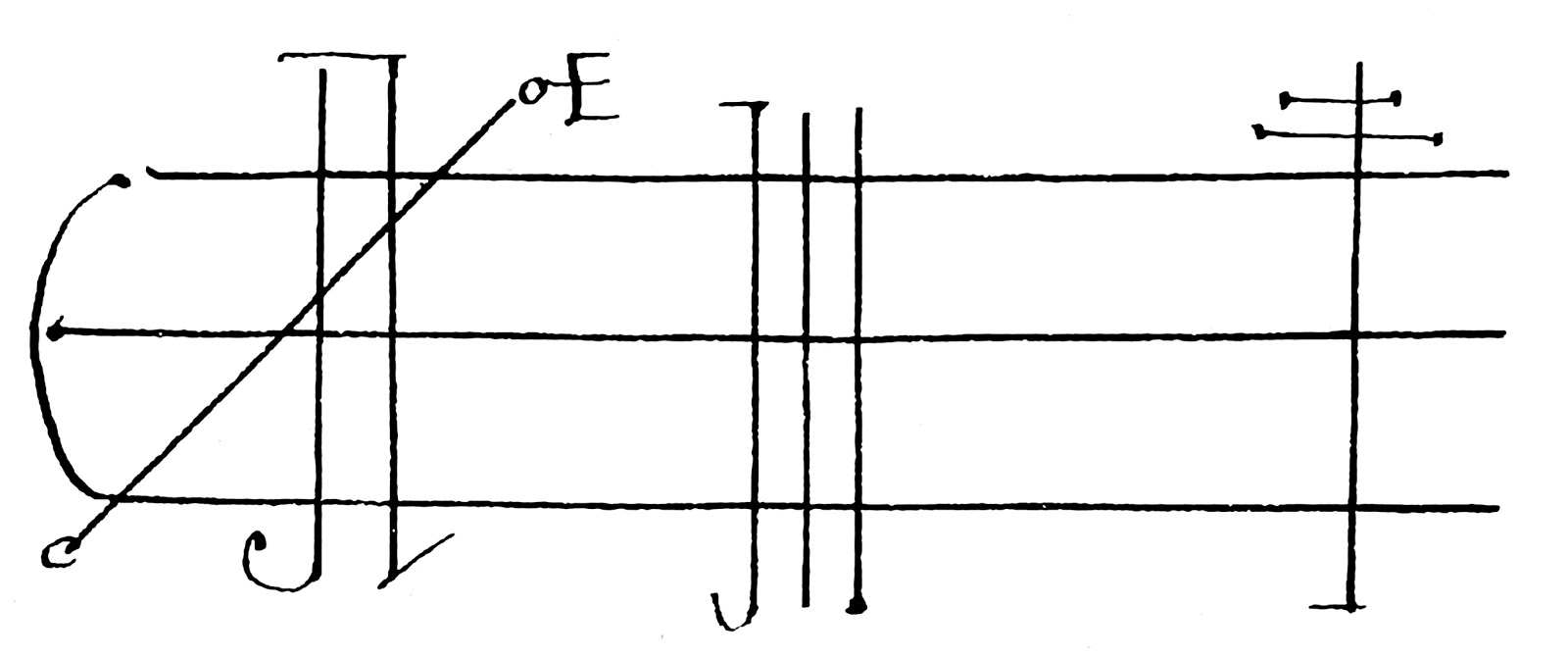
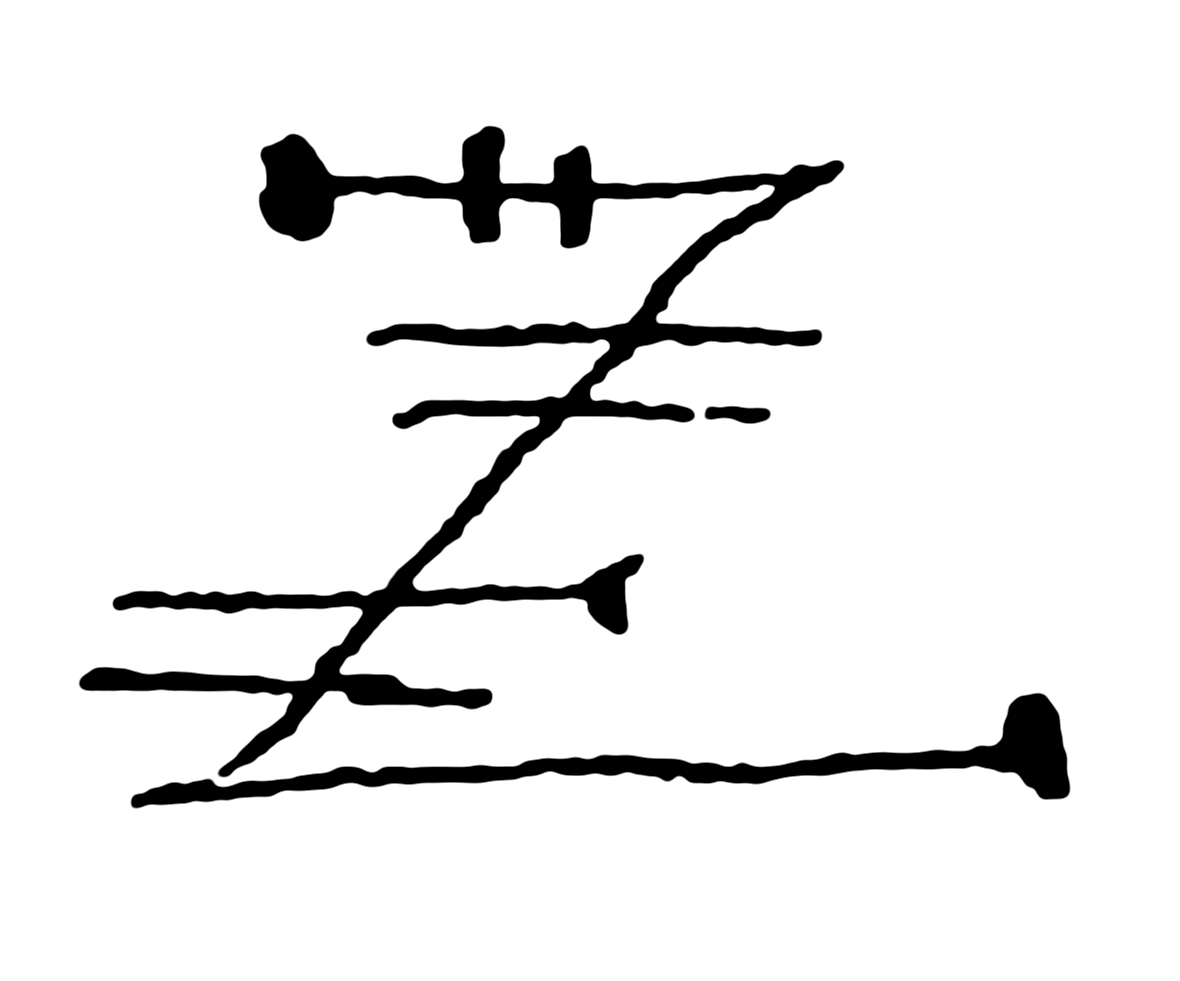
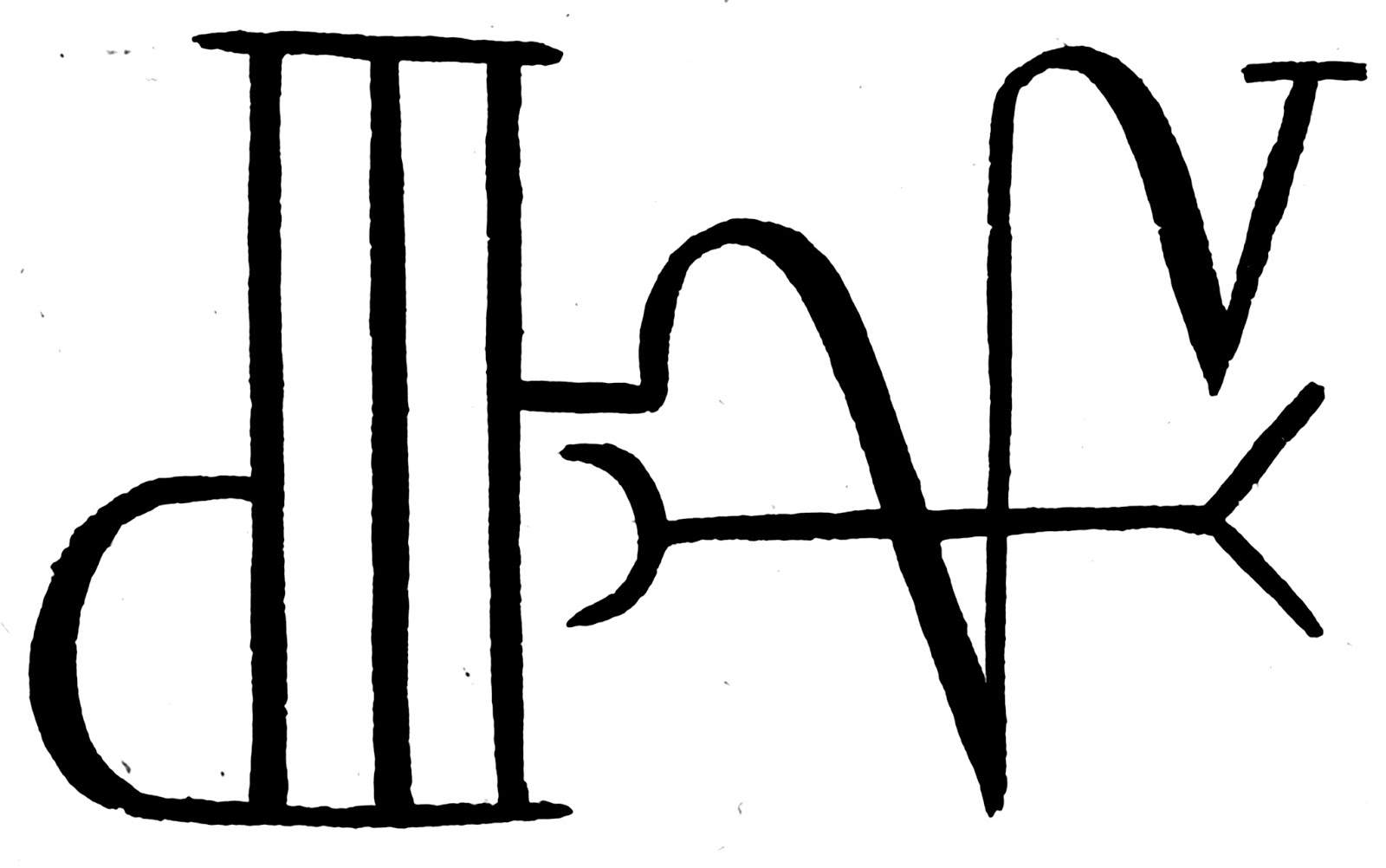
The seals of the seven angels are quite extraordinary in character and shape, quite like the rest of the manuscript itself. 


Seal of Michael (Sun)


CSS.1a


 CSS.1b

The first seal is meant as a general illustration at the beginning of a new book in the manuscript, as the title announces: Incipit Incipit Liber Tertius Clavicula Salomonis (Here Begins the Third Book of the Clavicula Salomonis). It s flanked by the astrological siglae of Mercury on the right and Moon on the left, but we know it well to be the seal of Michael from the Heptameron. 

Studying both seals, we see that none of its characteristics are accidental, so the direct source is not a printed Heptameron. From left to right: the beginning of the horizontal line, in the large curve, is not a circle or a closed loop, but a mere line or a slightly descending curve; Where the H seals had a descending slanted line, both these seals have a curious broken like. This is a quite new characteristic in these seals. In the U shaped part of the seal, where the H seals have a cross usually, there is nothing here. This is consistent with one source: MC.3, the Wroclaw Magical Calendar.   The rest of the seal is quite normal, but we are keen to examine the loop: in the H seals, this loop is not a minor trait, its a rhomboidal shape. No other version has a round shape (and MC.3 has nothing at all) except for MC.1.


Seal of Gabriel (Moon)
 CSS.2
The seal of Gabriel also bares great resemblance to the other seals, but it has quite a few unique characteristics.
The first vertical segment is reduced to a simple line, disjointed from the main horizontal line. The second vertical segment has very simplified heads, in the shape of rigns or semi-rings. One of the most intriguing features is the lack of horizontal compartments in the enclosed figure: only one vertical line, unlike any seal encountered. While we would expect it to be similar to the Scot seals and the MC series, it has exactly what they lack (a vertical line) and it lacks exactly what they supply (the three horizontal lines). The seal maintains the H feature of the two lower case b-s, as they lack in the MC versions altogether and are not morphed into 6s. The following element, the A shape, is much more consistent with the MC series, as it is cursive, unlike Scot and the H series. Another prominent feature would be the presence of two cursive Ms separated from the main line, not one angular M jointed to the line, a feature completely new. The last swirl is quite consistent with the H series, but much more cursive, resembling more a cursive U.   If the seal of Michael would lead us to a manuscript akin to CM.3, the Wroclaw Codex, but not identical, the seal of Gabriel also seems to support that.


The seal of Samael

CSS.3
 
 
As accustomed to surprises, this seal does not fail to disappoint. From the minor morphology changes in the previous seals, this one takes a leap. The first element is a smallish simple cross, like all other versions. The next element is no longer a straight angle with a loop, but a loop upon a horizontal angle, the whole element is slanted to the right. The next section of the seal is completely changed, retaining only small resembling elements: the x shape and the horizontal line through the circle remind us of the previous seal variations, but the circle is not at a 45 degree angle, its placed horizontally, from it protruding two symmetric elements with angles below and small arrows joined at the top. This seal has a completely new look and cannot even be counted as a copyists error. It is unlike anything I have met with in the study of these seals.


Seal of Raphael (Mercury)

CSS.4
 
 
The source of this seal in its oldest form has to be the Heptameron, as the attribution of the seal is not interchanged with that of Michael. Yet again, novelty and change. The first element is a backwards L, but not started from the medial line, like most seals. The second element is similar, a circle breaking the line, with a vertical line through it, but it is simple and unadorned with a foot, like most have it. The following common element, a simple line through the medial one, is missing. The third element of this seal, where most figures would have an elongated circle with a cross inscribed, turn here into a sort of beetle-shape: a vertical ellipse halved, crowned above and below with two semicircles, a unique trait. The right half is equally original: we have one X shape instead of two verticals and two crescents, on one side and the other of the X. The final K shape is fairly standard.


Seal of Sachiel (Jupiter)

CSS.5


The seal of Sachiel is entirely different from the others and seems to be independent. Not only the morphology of the seal is entirely alien to the other Heptameron-based seals, but the seal itself is unknown. The top part of the seal is a horizontal line, capped with tho descending oblique crosses, the middle being joined to the top of an angle. The ascending angle is capped with two rings and it contains a symbol similar to a 2, possibly derived from the astrological sigla of the planet Jupiter. The lower half is some sort of graphic construct meant to describe a flaming sphere s bottom, perhaps the result of a vision obtained in the practice of the rituals prescribed. The flaming sphere bottom has a trapezoid attached, azured, with flames or flame-like symbols as well. To my knowledge, this is completely original, and has not been encountered anywhere.  


Seal of Anael (Venus)

 CSS.6


This seal is entirely original as well, and not previously attested anywhere. It has no resemblance with the Heptameron seal. This character is made up of a trapezoid seated upon an elongated ellipse, flaming beneath. It is capped with two rings in the upper corners and halved by a horizontal line, itself capped with seals. The upper part contains what seem to be two incomplete Venus siglae, joined to the top line.


Seal of Cassiel (Saturn)


CSS.7


The  last seal in this series is the character of the Saturnine prince. This last seal bears a small resemblance to the others in the H series, namely it is an oversimplified version of the second mark we find in the tripartite seals of Cassiel: Hept.1, 2 and 3, Scot.7, Clav.A.7.1 and 2, exceptions being the MC series. 


Conclusions: the CSS is a highly ecclectic mix of seals, some taken from traditional sources, some modified as the writer saw fit, and others entirely original. If the author used the Heptameron, he did not consult a printed version, or chose alternate seals from another copy of it or a similar work, undiscovered.